Turning Access into Public Benefit
An offshore cod allocation is not our ultimate end goal. With fair offshore access, LFUSCL can help convert a rebuilding public resource into measurable value for southern Labrador.
This would mean more stable plant operations, stronger employment, greater market continuity, and more resilient coastal communities.
LFUSCL is ready because we are:
Adjacent
Labrador is closest to a significant share of the resource.
Prepared
LFUSCL has vessels, plants, people, and markets already in place.
Community-Based
The company is harvester-owned and built to reinvest fisheries value in southern Labrador.
Stabilizing
Cod access supports more consistent plant operations, employment, and community resilience.
Responsible
LFUSCL can work within conservation, monitoring, and science-based management requirements.
Together, these strengths make LFUSCL a practical, responsible, and community-focused partner for the next chapter of the Northern Cod fishery.
Public Resources for
Public Benefit
For southern Labrador, that means making sure fish caught off Labrador creates value in Labrador—through harvesters, workers, processing plants, local businesses, and coastal communities.
Adjacency
is More Than Geography
In fisheries all over the world, “adjacency” means more than where the fish are harvested.
It also means:
where the infrastructure exists
where people depend on the resource
where investment has already occurred
and where the long-term economic impacts are felt most directly.
For the coastal communities of Labrador, this is not an abstract principle. It’s directly related to a future built around a cod fishery that has shaped our way of life for centuries.
Southern Labrador’s fishery is changing
For nearly 50 years, LFUSCL has helped southern Labrador adapt through change in the fishery.
Today, another major transition is underway.
Shrimp and crab have long supported harvesters, plant workers, and coastal communities across the region, but are both facing increasing uncertainty and declines. Other species, including capelin and turbot, provide important activity but cannot carry the future of southern Labrador’s fishery on their own.
Meanwhile, the science is clear that Northern Cod is rebounding.
Nearly 50% of the biomass is in Labrador-adjacent waters, within NAFO Division 2J.
This represents the most significant resource opportunity for coastal Labrador communities, capable of supporting diversification, plant stability, employment, and long-term regional resilience.
LFUSCL has already prepared for this transition. In the last ten years, we have invested heavily in the vessels, plants, people, processing capacity, and market relationships needed to help turn Northern Cod access into long-term value for southern Labrador.
We are not asking to build new capacity from scratch, because our capacity already exists. What is needed now is fair access that allows that capacity to work for the communities closest to the resource.
Aligning
Access with Adjacency
Today, much of the economic value generated from Labrador-adjacent cod harvesting is realized outside Labrador, despite the region’s proximity to the resource and its existing harvesting and processing capacity.
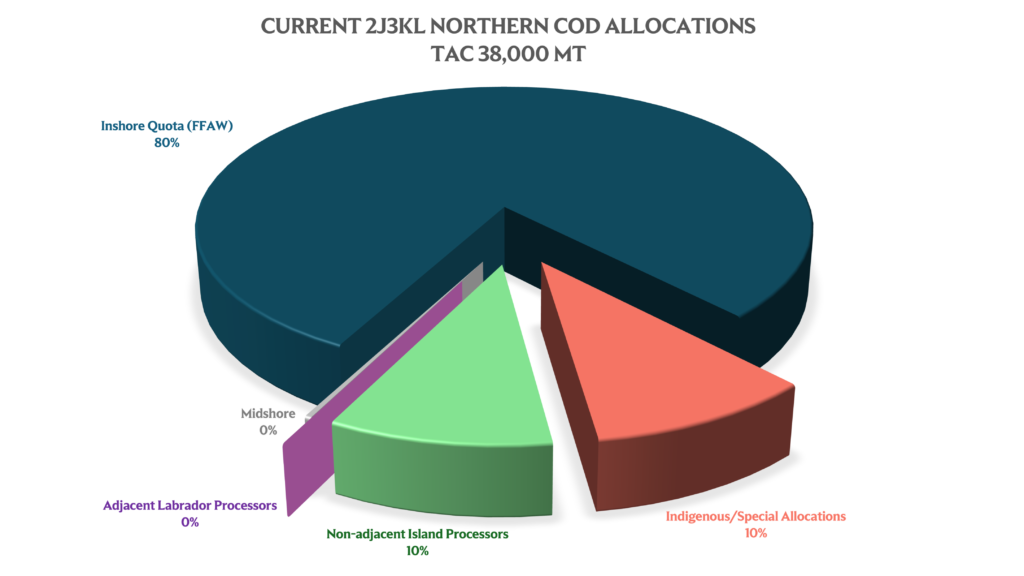
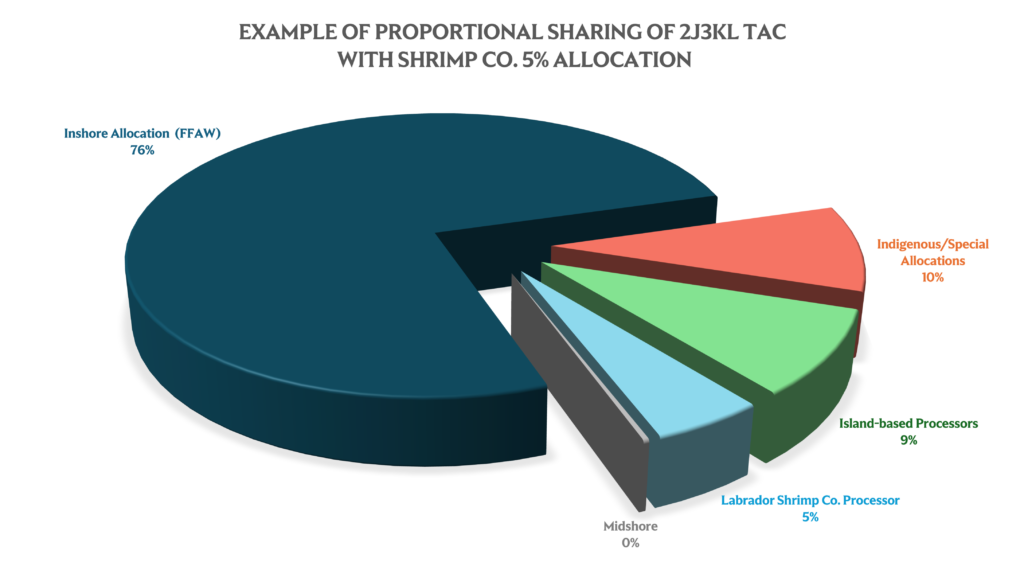
As the Total Allowable Catch for Northern Cod grows, there is an opportunity to improve that balance without displacing existing participants.
A fair offshore allocation for LFUSCL would allow southern Labrador to share more directly in the benefits of a resource adjacent to our coast, while using existing vessels, plants, workers, and markets to support responsible harvesting and regional economic stability.
Nearly 50 years ago, Labrador fish harvesters came together to build something that could help sustain coastal communities following the collapse of the provincial cod fishery.
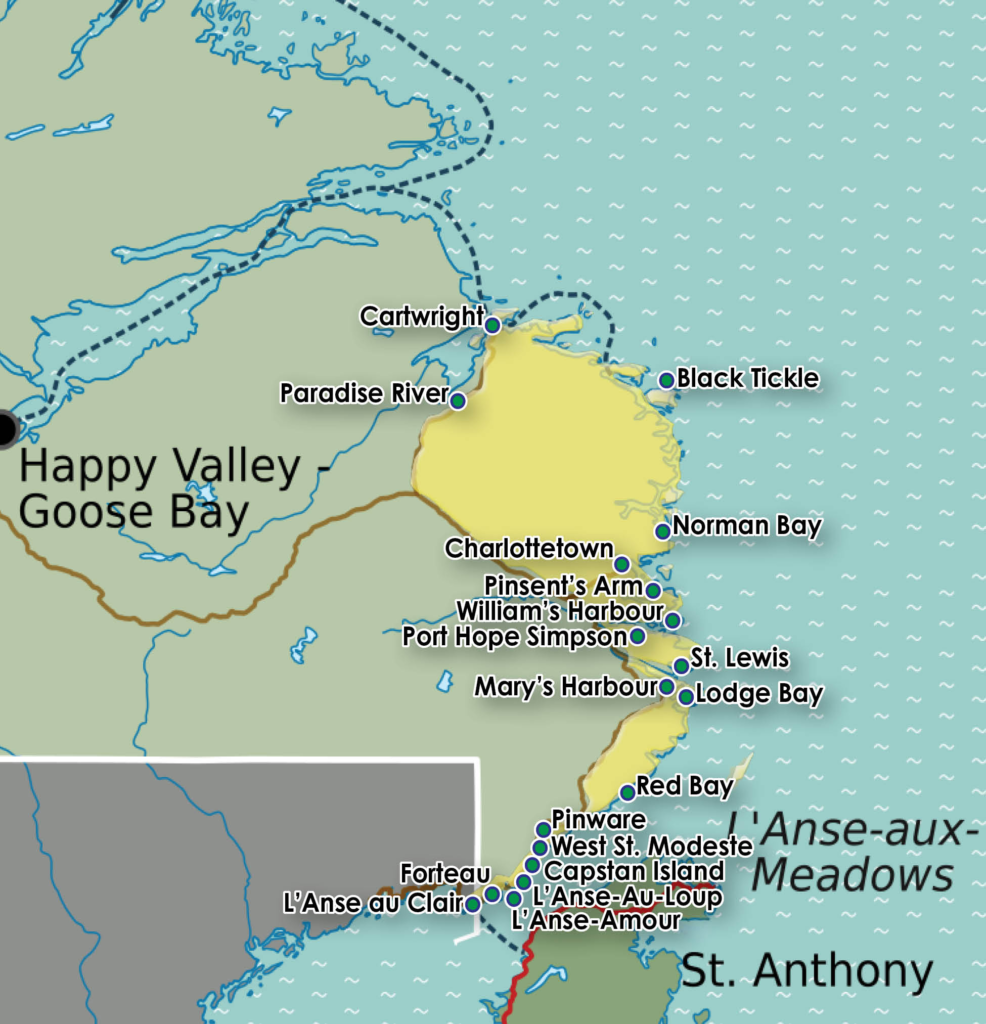
Today, Labrador Fishermen’s Union Shrimp Company Limited is a fully integrated seafood company with six state-of-the-art seafood processing plants located at Charlottetown (Shrimp), Mary’s Harbour (Crab) and Mary’s Harbour (Groundfish), L’Anse au Loup (Groundfish and Pelagics), Pinsent’s Arm (Pelagics) and Cartwright (Crab and Groundfish).
Our company’s model is different from a conventional private seafood company. Owned by local harvesters and built around reinvestment, we work to ensure the value of our fisheries supports the people, infrastructure, and communities of southern Labrador.
LFUSCL by the Numbers
Our Capacity
for Cod
Fair Offshore Access
Consistent plant operations
Stabilize employment & retain skilled workers
Strengthen local harvesters & suppliers
Sustain rural coastal communities
Keep more value in Labrador
When access is connected to existing local capacity, the benefits extend beyond the point of harvest. They move through plants, paycheques, suppliers, local services, families, and communities.
Northern Cod is returning.
Labrador is ready to build its future.
Ensured access will stabilize communities adjacent to the resource. This can be achieved by sharing the benefits of growth in the Total Allowable Catch (TAC), without displacing others.
LFUSCL has already built the capacity to turn offshore access into plant work, harvester income, market stability, and long-term community resilience.